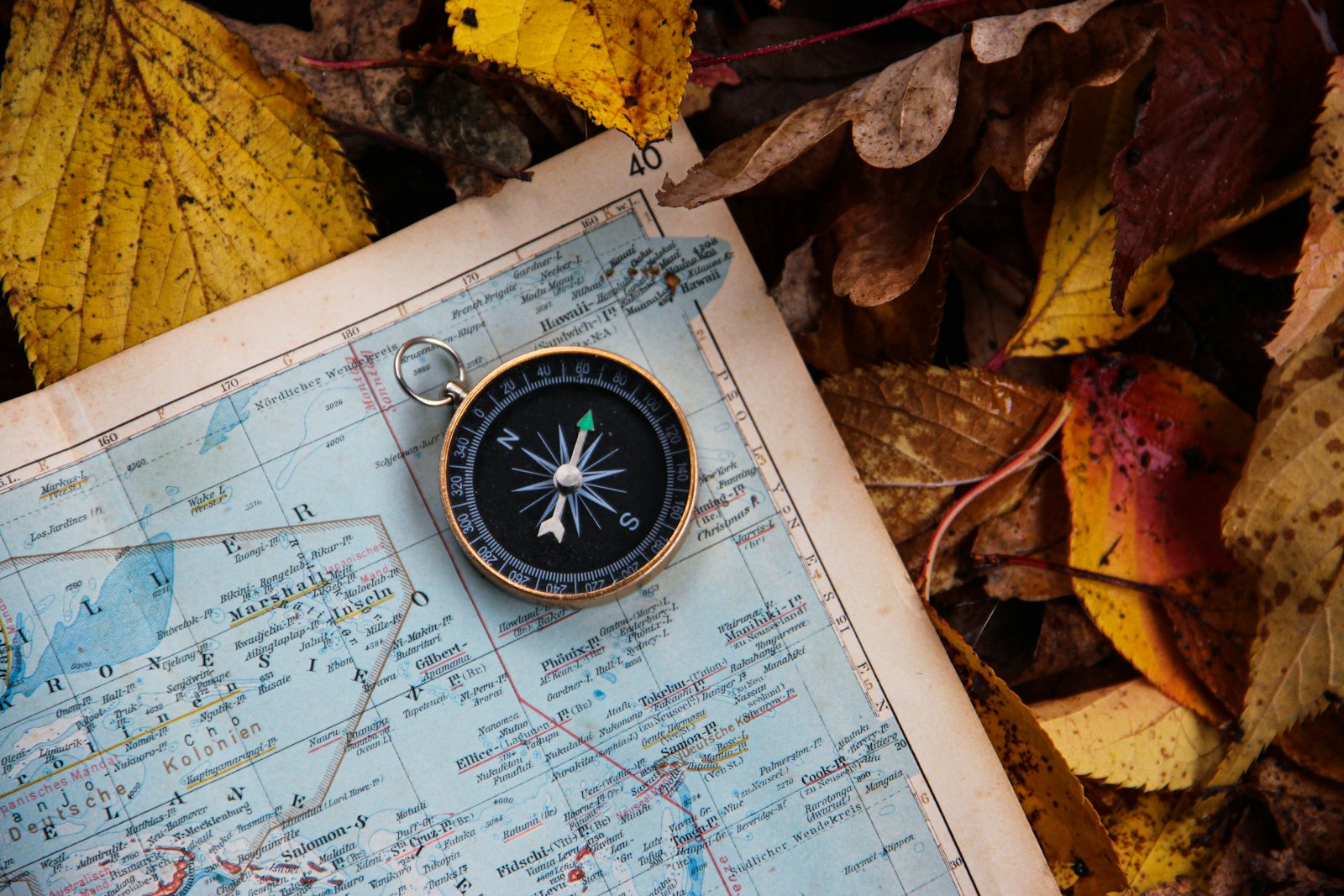
Say it out loud once: com·o. And now: com·í. Can you hear the little jump? One single sound changes, and you have travelled back a day. No ticket. No suitcase. Just an ending.
The course takes you through sixteen tenses, counting the commands. That sounds like exam stress. But you can see it differently: as a map. Every tense is a place, and every place has a picture. Know the pictures and you know the way. And the apple comes along everywhere.
Why a picture is quicker than a grammar term
‘Pretérito pluscuamperfecto’. Read that once. Now read this: the Two-Step Time Machine. Which one can you see? Exactly.
Researchers call this the picture superiority effect. What we have seen as a picture, we recognise more easily later than a word. A study with children, teenagers and young adults found the effect in almost every age group; only in the youngest group did it not show up every time. So the grammar term is not wrong. It is just a poor doorman. The picture lets you in, and the name follows on its own.
That is why every tense at LingoRhythm gets a picture first and a name second. The picture is the hook. The ending hangs on it.
The map: where each tense lives
Imagine a map. Now sits in the middle. Yesterday lies to the left, tomorrow to the right. And above, slightly in the clouds, live wishes and ‘if’. The sentence stays the same everywhere: comer una manzana, to eat an apple. Only the ending moves house.
What is now
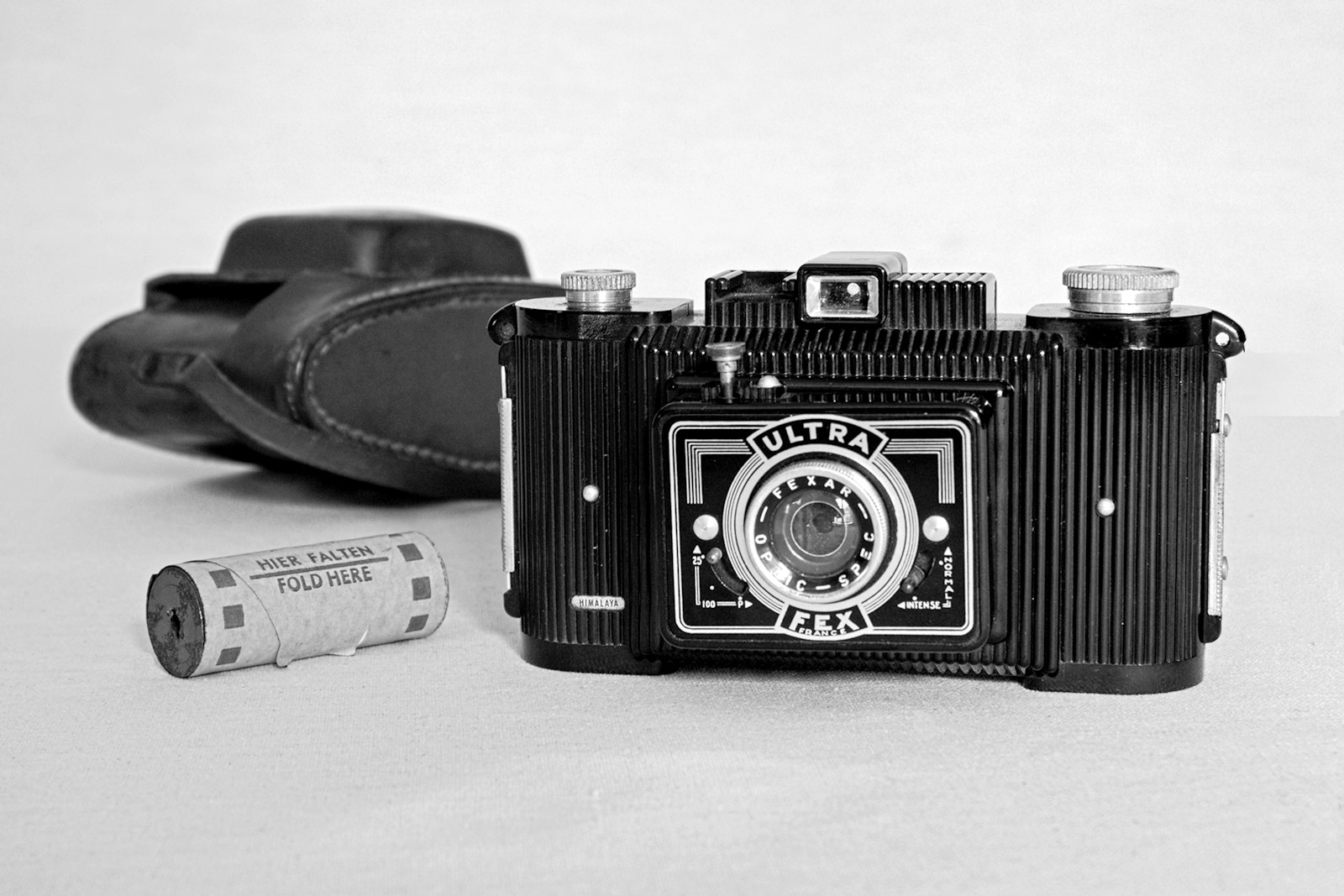
- The Right-Now Camera (01): Como una manzana. Click. I eat an apple, right now or in general.
- The Live Show (03): Estoy comiendo una manzana. The show is on air, and I am in the middle of it.
- Captain’s Orders: YES! (07a): ¡Come una manzana! Eat an apple. Full steam ahead.
- Captain’s Orders: NO! (07b): ¡No comas una manzana! Don’t eat an apple. Drop anchor.
What was
- The Memory Chest (04): He comido una manzana. I have eaten an apple. The chest is still in the room; yesterday reaches into today.
- The Storybook (05): Comí una manzana. I ate an apple. Page turned, story finished.
- The Old-Times Movie (06): Comía una manzana. I used to eat an apple, again and again. The film runs in the background, with no end credits.
- The Two-Step Time Machine (11): Había comido una manzana. I had eaten an apple. Back to yesterday first, then one more step.
What is coming
- The Countdown Rocket (02): Voy a comer una manzana. I am going to eat an apple. Three, two, one.
- The Fortune-Teller’s Crystal Ball (10): Comeré una manzana. I will eat an apple. At some point. The ball knows when.
- The Tomorrow Checklist (14): Habré comido una manzana. I will have eaten an apple. By tomorrow the box is already ticked.
Wishes and ‘if’
- The Wish Magic Machine (08): Quiero que comas una manzana. I want you to eat an apple. The machine hums; the wish has gone in.
- The Gentle Wish Balloon (09): Comería una manzana. I would eat an apple. Very light, very polite.
- The Dream Cloud (12): Si comiera una manzana … If I ate an apple … A thought that floats.
- The Balloon That Flew Away (13): Habría comido una manzana. I would have eaten an apple. The chance is gone; you wave it goodbye.
- The Yesterday Magic Wand (15): Si hubiera comido una manzana … If I had eaten an apple … One wave, and yesterday looks different.
Notice something? Una manzana never moves. It is the ground you walk on. The ending is your step. The whole method is built like that: one sentence, one picture, one song. The Time-Travel Map in the course shows all sixteen pictures at a glance, to hang on the wall or to use as a screen background.
Odd but true: Spain lives an hour in the future
Look at a world map. The prime meridian, the Greenwich line, runs straight through Spain. Geographically, almost the whole country belongs in the same time zone as London and Lisbon. Even so, the clocks in Madrid run like the clocks in Berlin. It has been that way since March 1940, when Franco’s government put the clocks forward by an hour, in the middle of the Second World War. Other countries changed their time in 1940 as well. Britain went back after the war; Spain and France stayed on Central European Time.
The exception is the Canary Islands, where it is an hour earlier. That is why Spanish radio often adds una hora menos en Canarias, one hour less in the Canaries, when it gives the time. According to the newspaper Diario de Avisos, the phrase goes back to the radio presenter José Antonio Pardellas, who ran Radio Nacional de España on the islands. And when a return to Greenwich time was being discussed in 2013, the then president of the Canaries had a worry of his own: without the time difference, the free advertising every hour on the hour would be gone.
Time travel, light edition: fly from Madrid to Tenerife and you put your watch back an hour. The Memory Chest can go in your hand luggage.
What you can try today
- Pick one picture. Just one. The Right-Now Camera, for example.
- Say the sentence three times. Once in a whisper, once normally, once in your best radio voice: Son las ocho. Como una manzana.
- Clap the syllables. co·mo has two beats, co·mí·a has three. Listen for where the stress lands.
- Sing it. To a tune you know, or with the lesson’s song.
- Travel on. Point to the next picture and say its sentence. Hear the difference. That was your first trip through time.
Why singing is more than fun
Sounds like messing about? Maybe. But the good kind. In 2014, researchers in Edinburgh had sixty adults learn phrases in Hungarian, a language that was new to almost all of them. One group repeated the phrases, one spoke them in rhythm, one sang them. After fifteen minutes of learning, the singing group did best in the tests overall.
One detail is especially interesting: rhythm on its own helped less than melody. Speaking in time is not quite enough, then. The tune seems to do some of the work. It is not a miracle cure. It was one study, with adults and short phrases. But it is a good reason not just to read the sentences but to sing them. Even out of tune. Especially out of tune.
What the map cannot do
A small truth on the side: a map is not yet a journey. It shows you where you are. You still have to walk, and here that means listening, saying, singing and reviewing. Short and often works better than once and long, for example after 1, 3 and 7 days.
The map does not replace a textbook either. It shows the framework of the tenses with regular verbs. Irregular verbs come later as a separate module. And strictly speaking, Spanish grammar knows a few more rare forms. One of them hides in an old proverb: Adonde fueres, haz lo que vieres, roughly ‘When in Rome, do as the Romans do’. In everyday life you will hardly meet it anywhere else.
Your next stop
The Time-Travel Map belongs to Lesson 00 of ¡A comer! and is part of the complete course, together with the 12 key sentences. If you would like to visit just one place first, Lesson 01, the Right-Now Camera, takes ten minutes.
Earworm for the road: Como una manzana. Click. Now.
Sources and image credits
- Defeyter, M. A., Russo, R. & McPartlin, P. L. (2009): The picture superiority effect in recognition memory: A developmental study using the response signal procedure. Cognitive Development, 24(3), 265–273. doi.org/10.1016/j.cogdev.2009.05.002
- Ludke, K. M., Ferreira, F. & Overy, K. (2014): Singing can facilitate foreign language learning. Memory & Cognition, 42(1), 41–52. doi.org/10.3758/s13421-013-0342-5
- NPR (30 Nov 2013): Spain Has Been In The ‘Wrong’ Time Zone For 7 Decades. npr.org
- Euronews (29 Mar 2026): The ‘hoax’ of the Nazi time zone in Spain. euronews.com
- Diario de Avisos (May 2026): Muere José Antonio Pardellas, figura clave en la radio y la televisión de Canarias. diariodeavisos.elespanol.com
- The Local Spain (23 Sep 2013): ‘Being an hour behind is great for the Canaries’. thelocal.es
- Cover image: Denise Jans / Unsplash. Folding camera: Didier Castelain / Unsplash.