Sound familiar? You are sitting on a terrace in Spain, the menu in front of you, the waitress smiling. And suddenly all that is left in your head is a big white hiss. Everything you once learnt at school has gone on holiday. Without you.
It happens to lots of people. Really. And the good news: you don’t need a 300-page phrasebook. One verb is enough to start with. Guess which one. Exactly: comer, to eat. With it and a few small companions you will get surprisingly far. Here are twelve sentences. Not all at once, promise.
Before you start: how much do you need to know?
Less than you think. You don’t have to sound perfect. People in Spain are usually pleased when someone tries. A sentence with the wrong ending is still a sentence. And a smile is correct in every tense.
A small pronunciation trick: in Spanish, each syllable gets roughly the same amount of time. So speak evenly and calmly rather than fast. Co·me·mos is not a sprint, it is three steps of the same size. Sarah explained in her article on music and language why even babies hear this beat.
At the table: the first four sentences
- ¿Comemos? – Shall we eat? One word, one question, one invitation. Said with a rising voice, everyone understands it.
- Ya he comido. – I’ve already eaten. Handy when someone offers you a third plate. This is the Memory Chest: it happened, and it still counts now.
- Todavía no he comido. – I haven’t eaten yet. The opposite, and often the more honest sentence at half past two.
- Voy a comer aquí. – I’m going to eat here. The Countdown Rocket. Useful when you want to show that you are staying, not just looking.
Notice something? Four sentences, four times comer, only the bits around it change. That is exactly how the course works too. One sentence, lots of small trips through time.
With others: questions and plans
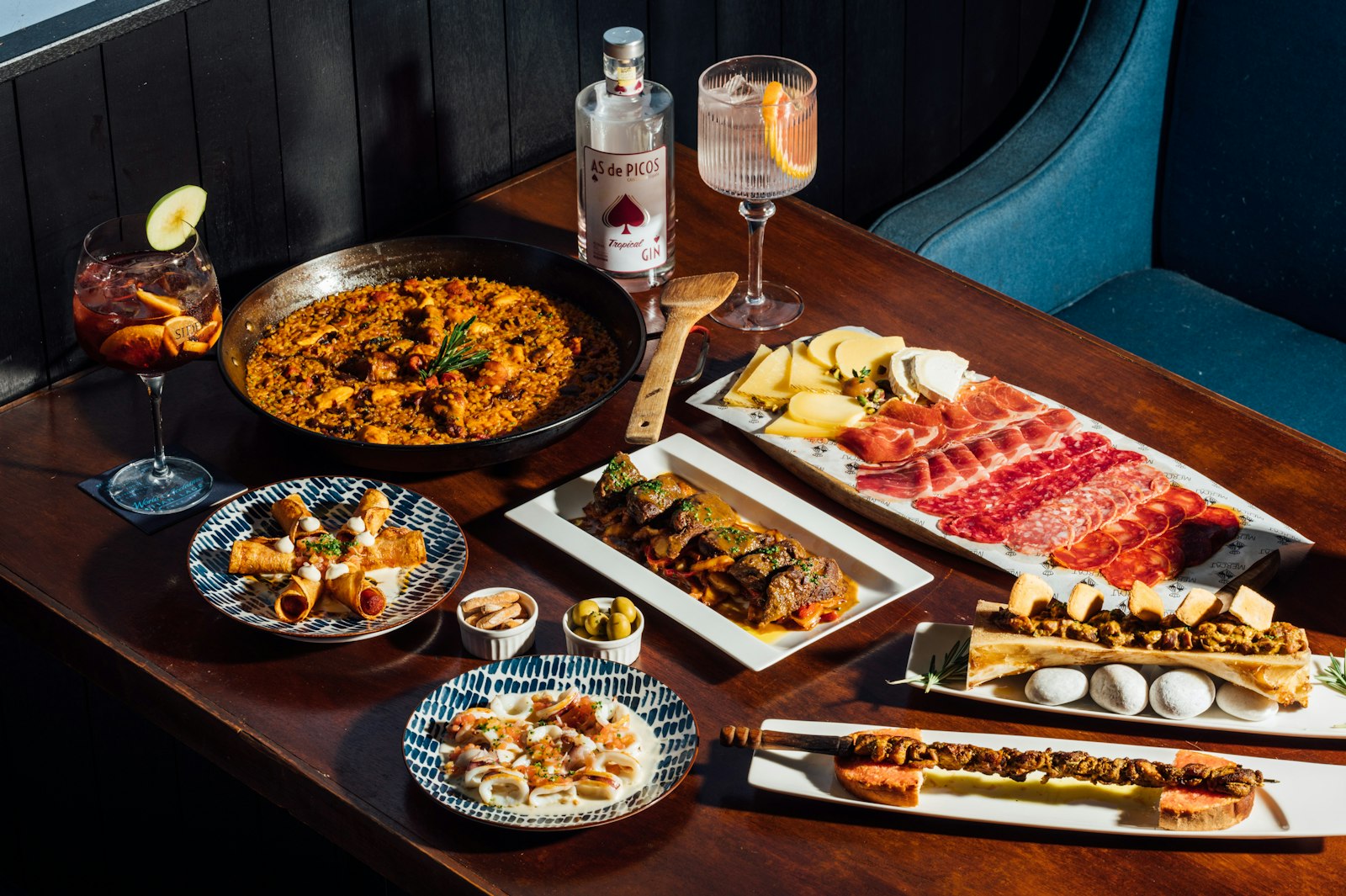
- ¿Qué coméis? – What are you (all) eating? Perfect when something delicious is on the next table. This is the vosotros form, used in Spain for ‘you’ plural.
- Mañana comeré aquí. – Tomorrow I’ll eat here. The Fortune-Teller’s Crystal Ball. A lovely compliment for a restaurant.
- Comería algo. – I’d eat something. The Gentle Wish Balloon. More polite than ‘I’m hungry’ and a little more elegant.
- ¿Se puede comer aquí? – Can you eat here? On the beach, on the train, on a bench outside a church. Better to ask once.
Too much? Then take just one of them today. Really. One sentence you know well will get you further than eight that tumble around in your head.
For hosts and friends
- ¡Come, come! – Eat, eat! You are more likely to hear this sentence than say it. It is a loving warning that another plate is on its way. Captain’s Orders: YES!
- No como carne. – I don’t eat meat. A small sentence that creates a lot of clarity. It works for anything you don’t eat: just swap the last word.
- He comido muy bien, gracias. – I’ve eaten very well, thank you. The nicest sentence to finish with. In Spain, for today people usually say he comido, not comí. So the Memory Chest is the right choice here.
- ¡A comer! – Food’s ready! Come and eat! That is how families in Spain are called to the table. And yes, that is exactly where our course gets its name.
Odd but true: New Year with twelve grapes
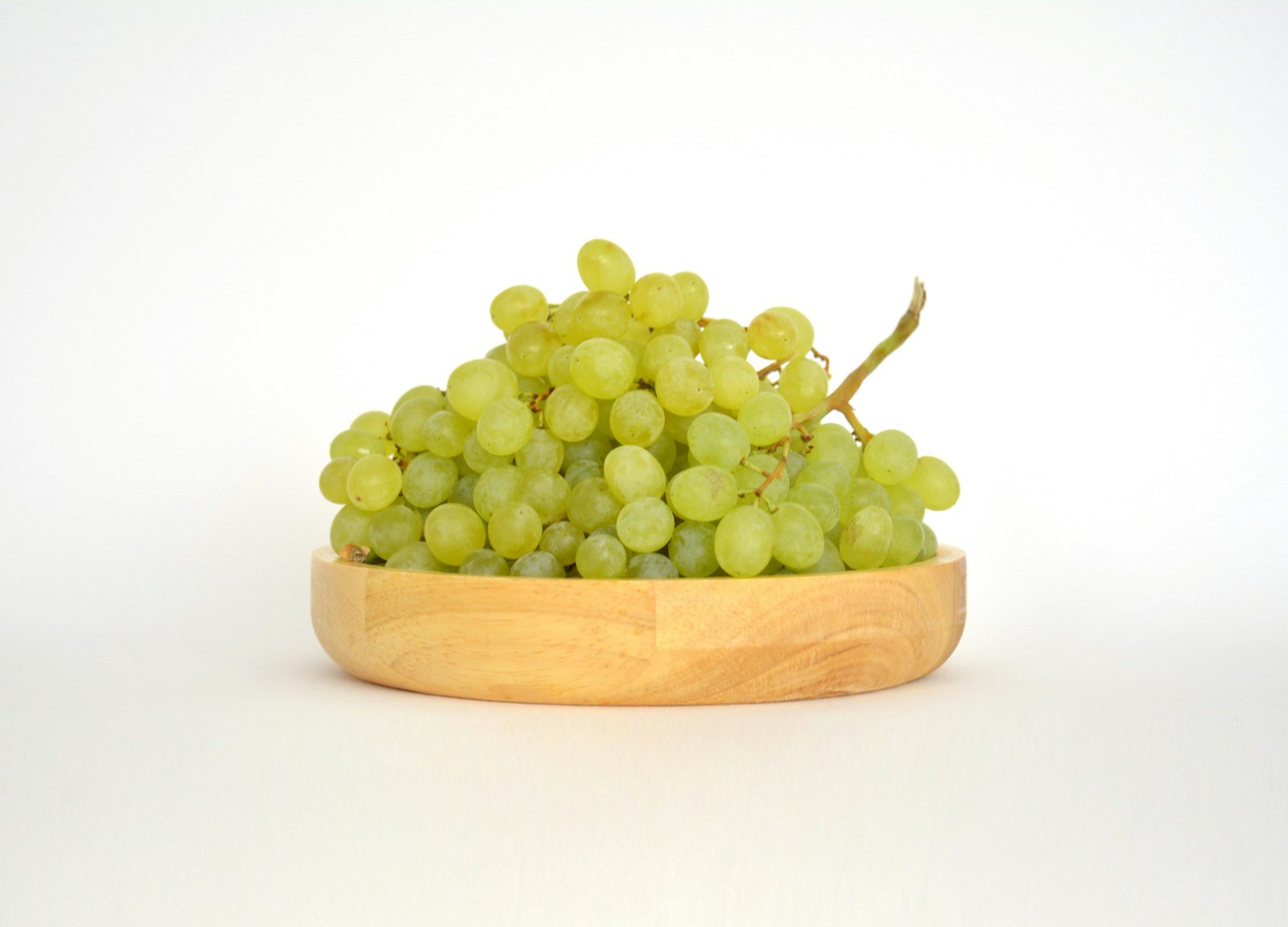
In Spain, on New Year’s Eve, people eat one grape for each of the twelve chimes at midnight. Twelve chimes, twelve grapes, twelve wishes. It sounds romantic; in practice it is a small race with full cheeks. Many people follow the bells of the Puerta del Sol in Madrid live on television.
Where does the custom come from? That is disputed. According to the food magazine Directo al Paladar, there is a documented advert in the Madrid newspaper El Imparcial on 29 December 1898 promoting ‘Las uvas de la suerte’, the lucky grapes. The often-told story of growers in Alicante who wanted to get rid of a record harvest in 1909 is more legend than evidence.
The matching sentence: He comido doce uvas. I have eaten twelve grapes. If you manage it, you can be proud.
Why everyone eats so late
Another moment that surprises people: at twelve noon, many restaurants in Spain are almost empty. Lunch is often eaten in the early afternoon, dinner happily late. One reason often given is the clock itself. Spain has lived in the Central European time zone since 1940, even though geographically it would fit better with London. So the sun rises and sets later, and mealtimes move with it. Laura told the whole story in her article on the Time-Travel Map.
And after the meal? Nobody jumps up straight away. There is even a word for the time you stay sitting comfortably at the table after eating, talking: sobremesa. Literally something like ‘over the table’. A word worth packing.
What you can try today
- Pick one of the twelve sentences. The one that makes you smile most.
- Say it out loud three times. Slowly, syllable by syllable.
- Say it at your next meal at home, even if nobody speaks Spanish. Especially then.
- Tomorrow, add the next one. Or don’t. Both are fine.
- If children are around: Melanie’s five games with an apple go wonderfully with this.
And if it still doesn’t click?
Then it doesn’t click. On holiday you trip over timetables, menus and sometimes your own tongue. That is part of it. Nobody expects you to be fluent after twelve sentences. These sentences are not a course; they are a rucksack for the first few days. There is time for everything else. And if you want to understand the endings calmly: ¡A comer! starts with Lesson 01, ten minutes, one sentence.
Permission for today: one sentence is enough. And if you end up saying it in English at the restaurant after all, that’s fine too. You’re on holiday.
Sources and image credits
- Directo al Paladar: La verdadera historia de las 12 uvas de Nochevieja. directoalpaladar.com
- NPR (30 Nov 2013): Spain Has Been In The ‘Wrong’ Time Zone For 7 Decades. npr.org
- Nazzi, T., Bertoncini, J. & Mehler, J. (1998): Language discrimination by newborns: Toward an understanding of the role of rhythm. Journal of Experimental Psychology: Human Perception and Performance, 24(3), 756–766. doi.org/10.1037/0096-1523.24.3.756
- Real Academia Española: Diccionario de la lengua española, entry ‘sobremesa’. dle.rae.es/sobremesa
- Cover image: CHUTTERSNAP / Unsplash. Grapes: Yasaman Abedini / Unsplash.