Why does Spanish need two past tenses, when English often gets by with ‘I ate’? Comí and comía look confusingly similar. One letter different, an accent in another place. And yet they tell two completely different stories. Let’s look at which ones.
It is not about when, but about how
The first surprise: both forms describe the past. The difference is not how long ago something happened. It is how we look at an event. Linguists call this aspect. Do we see something as a finished whole, from the outside, with a beginning and an end? Or are we standing in the middle of it, seeing something that is running or repeating?
That sounds abstract. So LingoRhythm works with pictures. Here are three.
Picture 1: The Storybook – comí
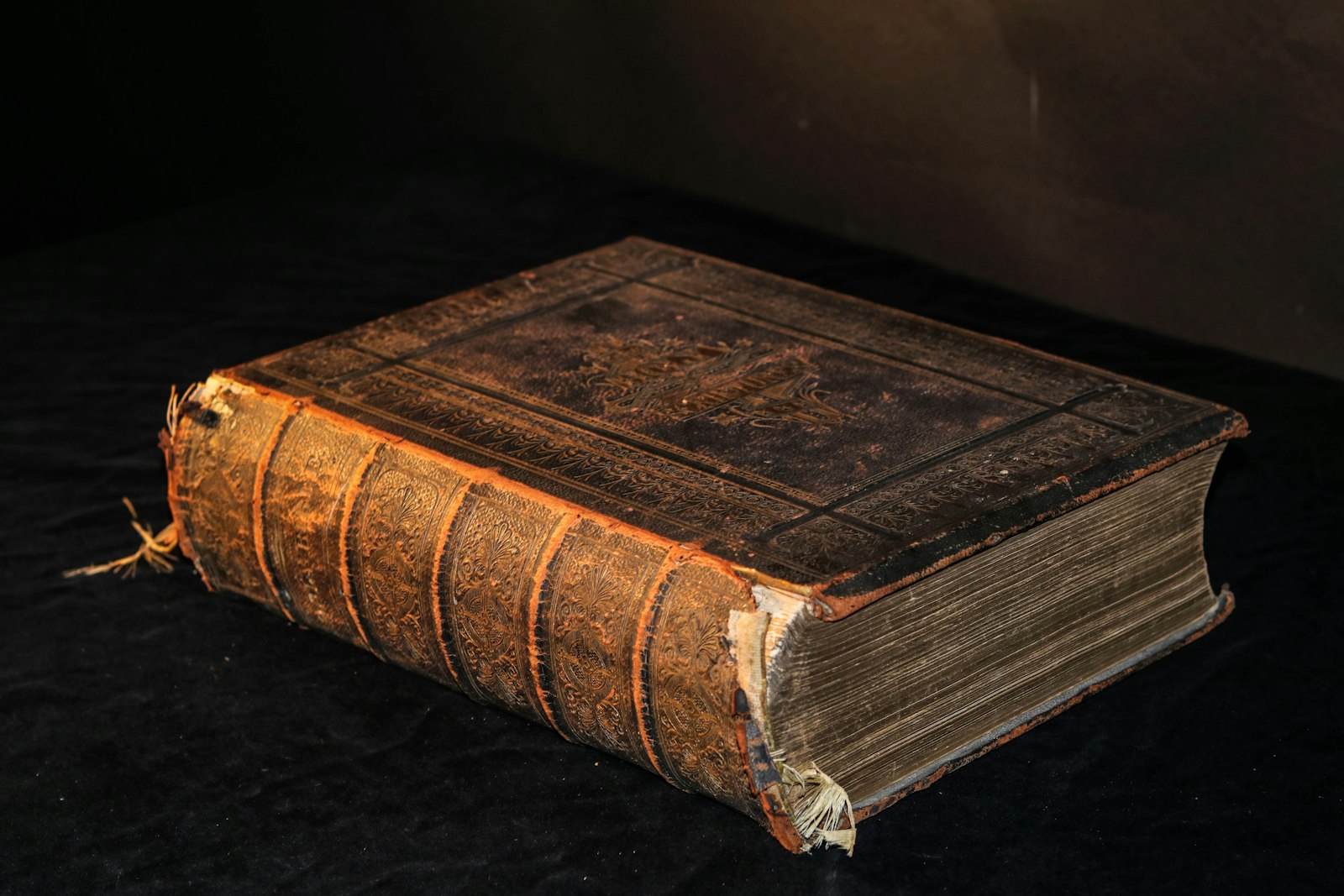
Imagine a book. You read a page, something happens, you turn the page. Done. That is comí, the pretérito indefinido or preterite.
Ayer comí una manzana. Yesterday I ate an apple. Once, finished, with a clear moment. If you can picture the sentence as a photo showing exactly one event, the Storybook is usually right.
Words that often turn up with the Storybook: ayer (yesterday), una vez (once), de repente (suddenly), el lunes (on Monday). They are hints, not laws. More on that in a moment.
Picture 2: The Old-Times Movie – comía
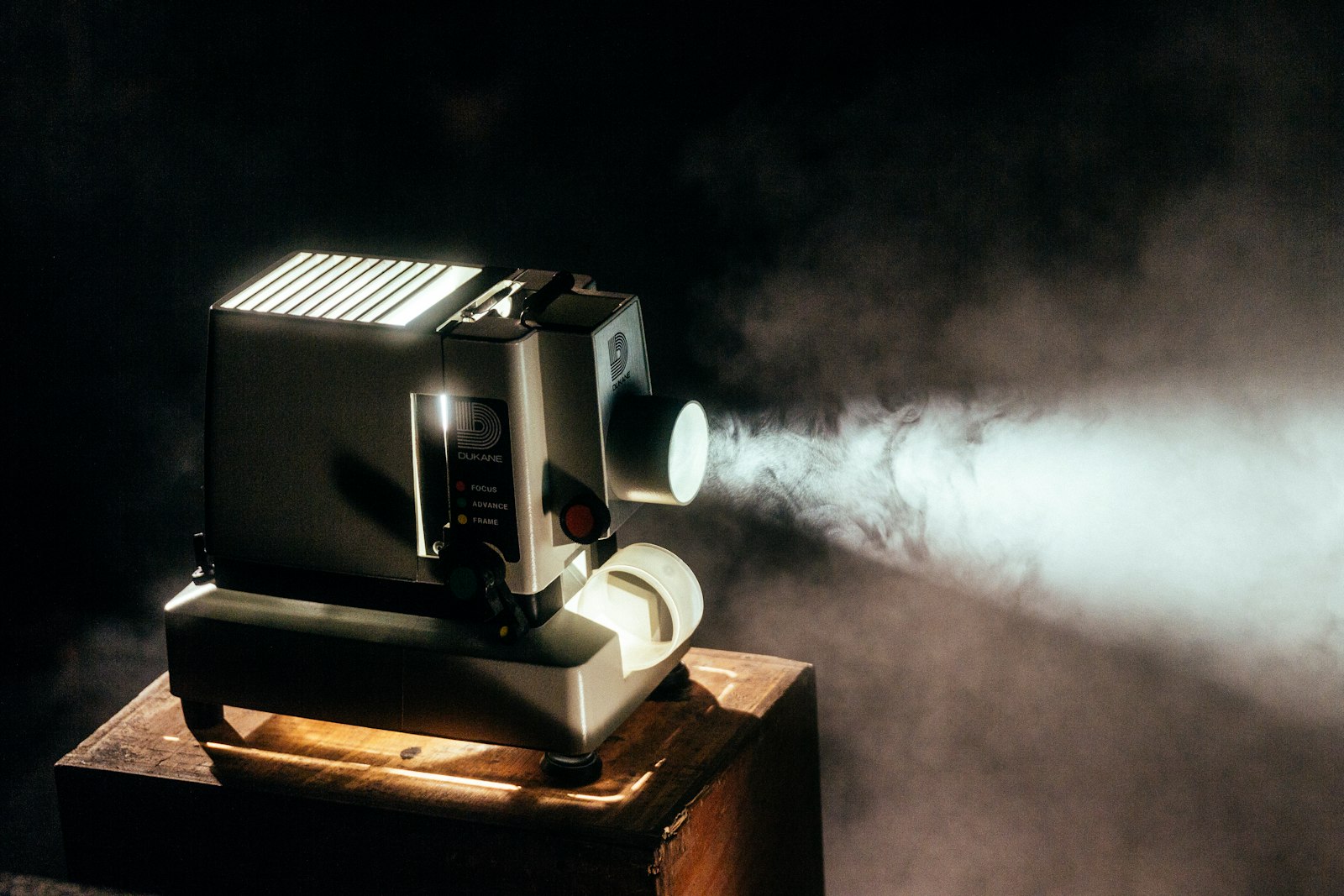
Now imagine an old film running in the background. It has no end credits; you don’t see where it starts or stops. It shows how things were, or what happened again and again. That is comía, the pretérito imperfecto or imperfect.
De niña, comía una manzana cada día. As a child I used to eat an apple every day. Not a single scene, but a habit. Or a description: La manzana era roja. The apple was red. That is film too, not a photo.
Typical companions of the film: siempre (always), cada día (every day), de niño / de niña (as a child), normalmente (usually).
Picture 3: The film is running, the book snaps shut
It gets most interesting when both pictures appear in one sentence. The film runs in the background, and suddenly something happens: a single event that interrupts the scene.
Mientras ellas comían, él comió la última manzana. While they were eating, he ate the last apple. The others’ eating is the film. His grab for the last apple is the page being turned. Cheeky, but grammatically perfect.
This combination is so typical of Spanish that whole fairy tales are built on it. First the world is described in film mode. Then something happens in book mode.
Odd but true: the most famous apple in fairy-tale land
Take Snow White, in Spanish Blancanieves. Blancanieves vivía con los siete enanitos. Snow White lived with the seven dwarfs: film, background, everyday life. Un día, Blancanieves comió la manzana. One day, Snow White ate the apple: book, a single moment that changes everything. The grammar tells the drama for you.
And one more thing: in the first edition of the Grimms’ fairy tales in 1812, it was not the stepmother who brought the poisoned apple, but Snow White’s own mother. Only in later editions, such as 1819, did she become the stepmother. You can read both versions on Wikisource. A fairy tale with two pasts, so to speak.
Why signal words are only hints
Many textbooks work with lists: ayer means preterite, siempre means imperfect. That helps at the start, and it is often true. But not always. An example:
- Ayer comía una manzana cuando … Yesterday I was eating an apple when … Here is ayer, and yet the film is running, because something is about to interrupt.
- Siempre comí bien en ese sitio. I always ate well at that place. Here is siempre, and yet it is the book, because that time is seen as closed.
One possible rule of thumb that goes further than any list: don’t ask ‘Which word is there?’ but ‘Do I see a photo or a film?’. Whether that question helps you, you will find out fastest by trying it.
What you can try today
- Take a sheet of paper and draw a book on the left and a strip of film on the right.
- Under the book, write: Ayer comí una manzana.
- Under the film, write: De niño, comía una manzana cada día.
- Tell yourself a mini fairy tale in three sentences: two sentences of film, one of book. For example: Era un día tranquilo. Ellas comían. De repente, él comió la última manzana.
- Read it out loud. Hear how the endings -ía and -í change the scene.
You will also find both pictures on Laura’s Time-Travel Map, right next to the Memory Chest. And if you want to practise them properly: in the course ¡A comer! they are Lesson 05, the Storybook, and Lesson 06, the Old-Times Movie.
What this article doesn’t do
Honestly: three pictures don’t solve every borderline case. Native speakers sometimes choose differently depending on region and point of view, and both forms can be correct with a slightly different meaning. There is also the Memory Chest, he comido, which in Spain is often preferred for things that happened today. Leonie mentioned it in her twelve sentences for a holiday. The pictures are a starting point, not a rulebook for everything.
In short: comí is a photo, a finished moment. Comía is a film, a habit or a background. And when both appear together, a story is born. Signal words help, but the better question is: photo or film?
Sources and image credits
- Brothers Grimm: Sneewittchen (Schneeweißchen), Kinder- und Hausmärchen, first edition 1812. de.wikisource.org
- Brothers Grimm: Sneewittchen, Kinder- und Hausmärchen, 1819 edition. de.wikisource.org
- Real Academia Española: Diccionario de la lengua española. dle.rae.es
- Cover image: Danika Perkinson / Unsplash. Projector: Jeremy Yap / Unsplash.