What you need: a table, a chair, headphones and ten minutes. Nothing more.
Today we’re not building a study plan. Today we’re building the place where the study plan happens. Because even the best plan doesn’t help much when the TV is on next door, the phone is buzzing and the lamp flickers.
Some people hardly notice any of this. Others notice everything. Noise, light, clutter. That’s true for many neurodivergent people, but not only for them. A tired mind after a long day is sensitive too. The good news: you don’t have to change the world. Just one square metre of it.
Here’s the checklist. Work through it from top to bottom. Tick things off. Done.
Step 1: Your ears
Start with your ears. They have no lids. You can’t close them.
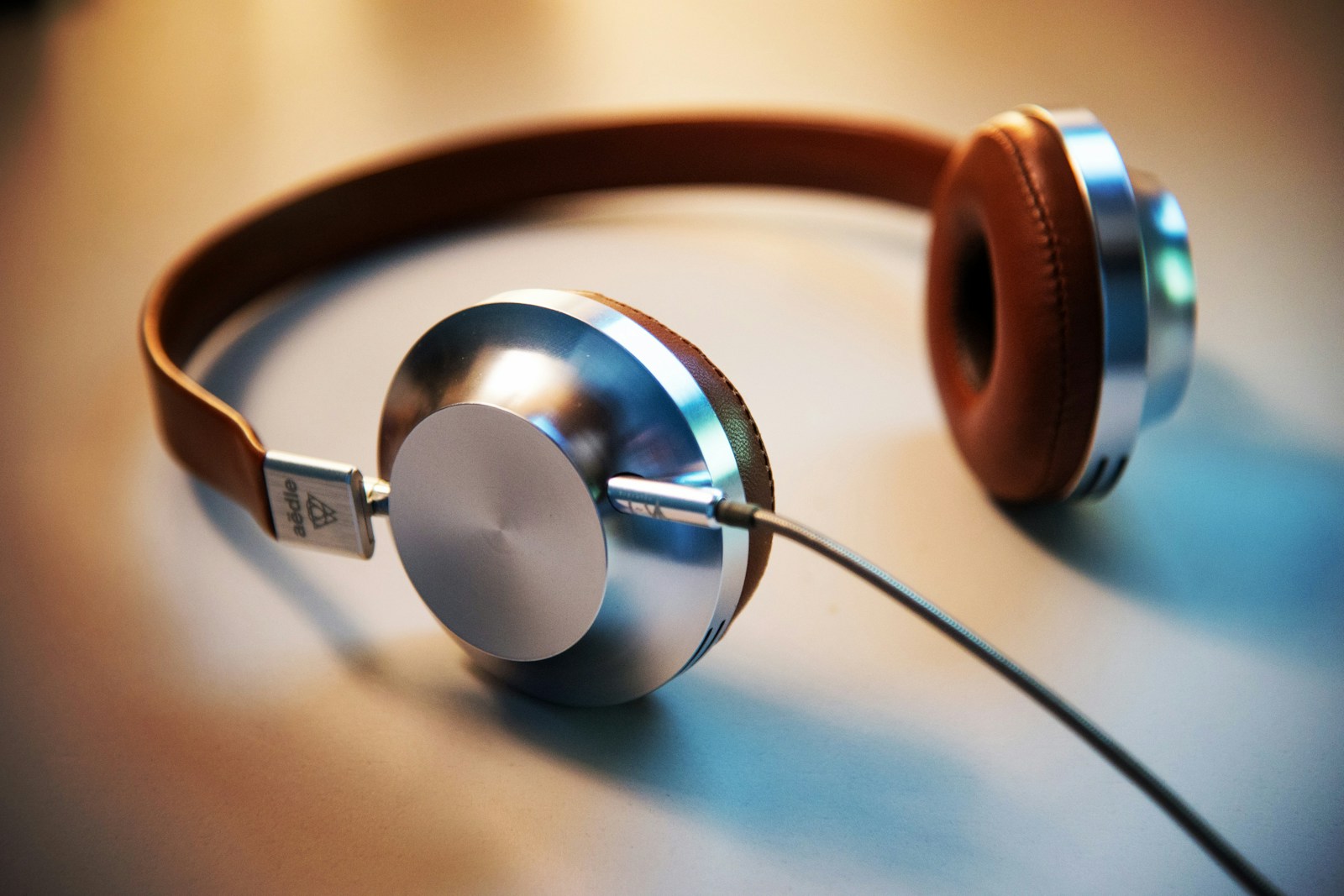
- Headphones on. Even if nothing is playing. Headphones muffle sound and tell your brain: this is study time.
- Noise cancelling on, if your headphones have it. If not: earplugs under the headphones work too.
- No conversations in the background. No talk radio. No podcast “just on in the background”.
Why conversations in particular? Because they are especially distracting. Back in 1982, the psychologists Pierre Salamé and Alan Baddeley showed that spoken language in the background disrupts short-term memory, even when you aren’t listening. Even nonsense words disrupt it. The content doesn’t matter. It’s enough that it sounds like speech.
For learning Spanish, that means: your mind is trying to hold on to Spanish words. And next door someone is talking. It’s like trying to remember a shopping list while someone keeps whispering other words in your ear.
Music is a special case. A song you’re learning with is part of the task. It doesn’t distract, it is the content. Background music with lyrics, on the other hand, is also speech in the background. If you need music on the side, choose something without vocals.
Step 2: Your eyes
- Light from the side. Not directly behind the screen. Not straight into your eyes.
- No flickering. A flickering lamp? Replace it. Today.
- Screen a little darker. It doesn’t need to be brighter than the room.
- A clear view. In front of you, only what you need for the lesson. Everything else goes in a box. The box goes under the table.
- One window open on your computer. One. Not twelve tabs.
And then: subtitles on.
With videos in Spanish, reading along helps many people. A 2013 meta-analysis by Maribel Montero Perez, Wim Van Den Noortgate and Piet Desmet brought together many studies on this. The result: captions in the foreign language clearly helped overall with listening comprehension and vocabulary. The ear hears. The eye confirms. The mind has to guess less.
Important: Spanish subtitles with Spanish audio. Not English ones. Otherwise you’ll only read English and the Spanish will rush past.
Step 3: Your body
- A chair you like sitting on. If the chair pinches, you think about the chair. Not about Spanish.
- Feet on the floor. Or on a box. As long as they’re steady.
- Put water out. Beforehand. So you don’t have to get up.
- Check the temperature. Too warm makes you sleepy. Too cold distracts. A jumper within reach solves both.
- Something for your hands, if you like to fidget. A squeeze ball, a smooth stone. Movement is allowed.
Weird but true: a writer lived in a room made of cork.
The French author Marcel Proust had the walls of his bedroom at 102 Boulevard Haussmann in Paris lined with cork. Against noise. And against the dust and pollen that troubled him. In the last years of his life he spent much of his time there. And wrote.
Today you can visit the room. A reconstruction stands in the Musée Carnavalet in Paris. You don’t need cork. But the idea is a good one: make your spot calm before you start.
Step 4: Your mind
- Phone in another room. Not face down on the table. In another room. If that’s not possible: in a drawer, on silent.
- Computer notifications off. All of them.
- Set a timer. Ten minutes. You know when it ends. That’s calming.
- A note for stray thoughts. You remember you need to take the bins out? Write it down. Keep learning. The note remembers it for you.
- Always the same order. Same place, same routine. Then your mind has nothing left to decide.
Why the same routine makes such a difference is explained by Sarah in Learning Spanish with autism: structure instead of surprise. In short: what is predictable costs less energy.
Step 5: The content
The learning material itself can overwhelm too. Flashing buttons. Fast cuts. Loud effects.
- Choose calm videos. No flashes, no frantic cuts.
- Volume down. Quieter than you think. You can always turn it up.
- One thing at a time. Listen first. Then read. Then speak. Not everything at once.
That’s why the LingoRhythm song videos are deliberately calm: one slow movement, no flashing, a seamless loop. Laura describes how they’re made in How a LingoRhythm song is made.
Step 6: The emergency plan
Sometimes it still gets too much. That isn’t failure. It’s information.
- Stop. Keep the headphones on. Close your eyes.
- Three slow breaths.
- Decide: carry on with something easy? Or call it a day?
- Both are right. A day you stopped early is better than a day you hate.
If sensory input often overwhelms you in everyday life, not just when studying: talk to professionals. Occupational therapists or autism and ADHD services know many ways to make daily life fit you better. This article doesn’t replace that.
The checklist to print
- Headphones on, noise cancelling on.
- No conversations, no music with vocals in the background.
- Light from the side, no flickering.
- Table clear except for the lesson.
- One window on the computer.
- Spanish subtitles on.
- Water and a jumper within reach.
- Phone out, notifications off.
- Timer set to ten minutes.
- A note for stray thoughts.
Ten points. Set them up once. Then just check them quickly each time. After a week you’ll do it without the list.
And what do you do at your new spot? For example, the ten minutes from 1-3-7: how Spanish stays in your head. Or one of the 5 games with an apple to play at home. And if you like repeating out loud: the headphones protect everyone else from you too. Why repeating works so well is explained in Repeating allowed: echoing as a learning tool.
Your step for today: put headphones, water and a note at your spot. Just that. Tomorrow the spot will be ready when you want to learn.
Sources and image credits
- Salamé, P. & Baddeley, A. (1982). Disruption of short-term memory by unattended speech: Implications for the structure of working memory. Journal of Verbal Learning and Verbal Behavior, 21(2), 150–164. doi.org/10.1016/S0022-5371(82)90521-7
- Montero Perez, M., Van Den Noortgate, W. & Desmet, P. (2013). Captioned video for L2 listening and vocabulary learning: A meta-analysis. System, 41(3), 720–739. doi.org/10.1016/j.system.2013.07.013
- Open Culture (2020): The Cork-Lined Bedroom & Writing Room of Marcel Proust
- Photo: Lee Campbell / Unsplash