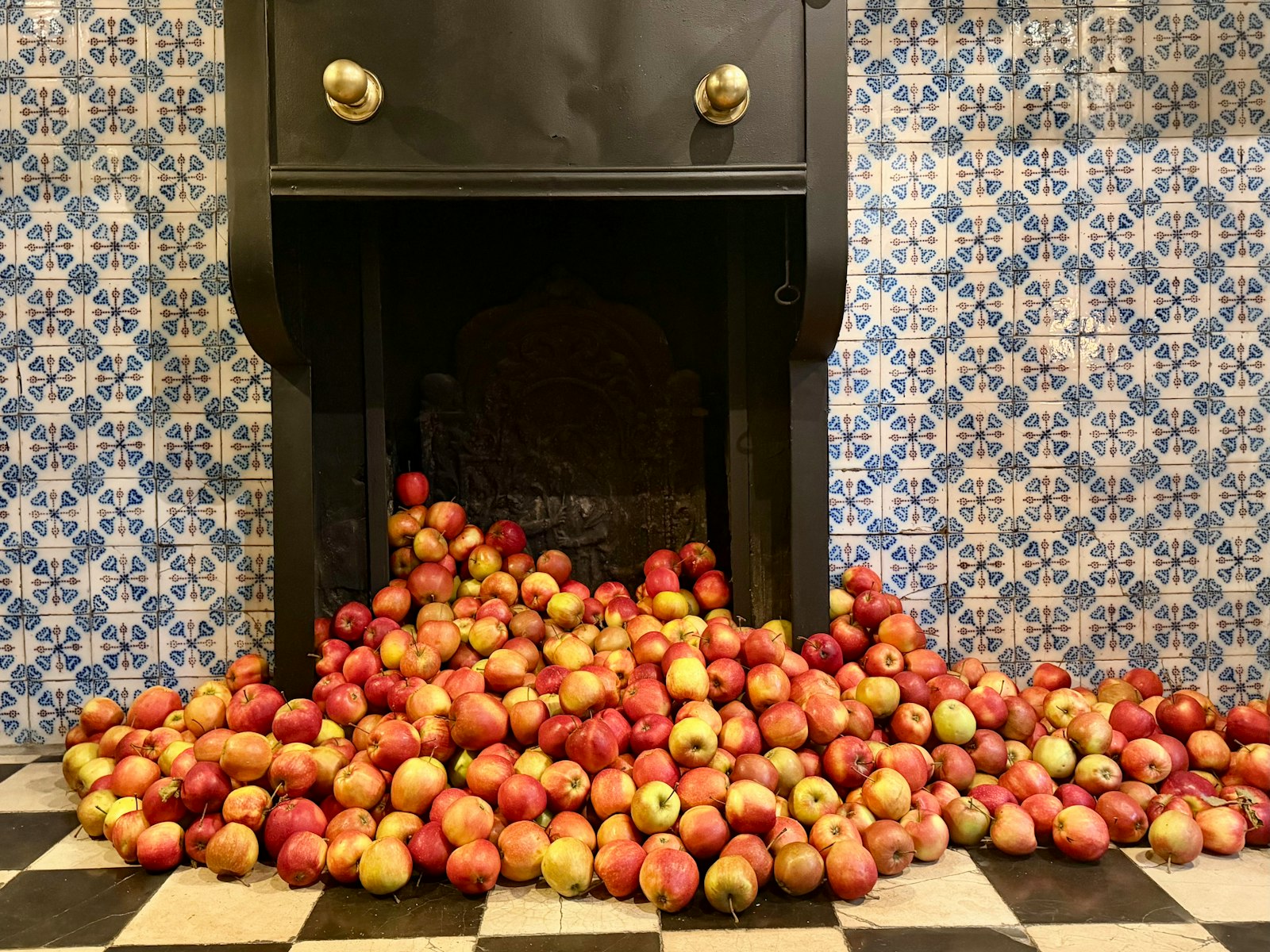
You need: one apple. Three slips of paper. A pen. Ten minutes. That is all.
No worksheet. No screen. One sentence is enough: comer una manzana, to eat an apple. You know it already. Now we play with it.
Before you start: three rules
- One game a day. Not five.
- Mistakes don’t count. A wrong guess just means saying the sentence once more.
- Adults cut. Children eat.
Each game takes two to five minutes. Stop while it is still fun. That is the best moment to stop, because then everyone wants to play again tomorrow.
Game 1: The Right-Now Camera
Practises: the present. Como una manzana. I eat an apple.
- One person holds the apple.
- The other makes a camera with their hands.
- Click! Whoever is in the photo says: Como una manzana.
- Swap.
Level up: photograph two people at once. Now it’s Comen una manzana. They eat an apple.
Why it works: the gesture becomes a hook. Camera means now. After a few rounds the hands do the remembering.
Game 2: Time-travel hopping
Practises: yesterday, now, tomorrow.
- Draw a book on the first slip, a camera on the second, a crystal ball on the third.
- Put them on the floor in a row. Book on the left, ball on the right.
- Hop onto a slip and say its sentence. Book: Comí una manzana. Camera: Como una manzana. Ball: Comeré una manzana.
- Someone calls out a picture. You hop there.
Level up: two hops back past the book is the Two-Step Time Machine: Había comido una manzana. You will find all the pictures in Laura’s article on the Time-Travel Map.
Quiet version: if hopping is too much, point instead. It works just as well.
Game 3: The captain says
Practises: commands. ¡Come! and ¡No comas!
- One person is the captain. A paper hat helps.
- The captain calls ¡Come una manzana! Everyone pretends to take a big bite.
- The captain calls ¡No comas una manzana! Everyone freezes.
- Whoever moves at ¡No comas! becomes the next captain.
It is the same idea as ‘Simon says’, which children in Spain know as Simón dice. Here the captain does the saying.
Why it works: yes and no sound almost the same. Come and comas. Moving makes the difference visible.
Game 4: The apple countdown
Practises: what happens next. Voy a comer una manzana. I am going to eat an apple.
- Cut the apple into slices.
- Everyone holds a slice in front of their mouth.
- Count down together: three, two, one.
- Everyone says Voy a comer una manzana! Then, and only then, bite.
Level up: after the bite, say He comido una manzana. I have eaten an apple. Rocket, then Memory Chest. Two tenses in ten seconds.
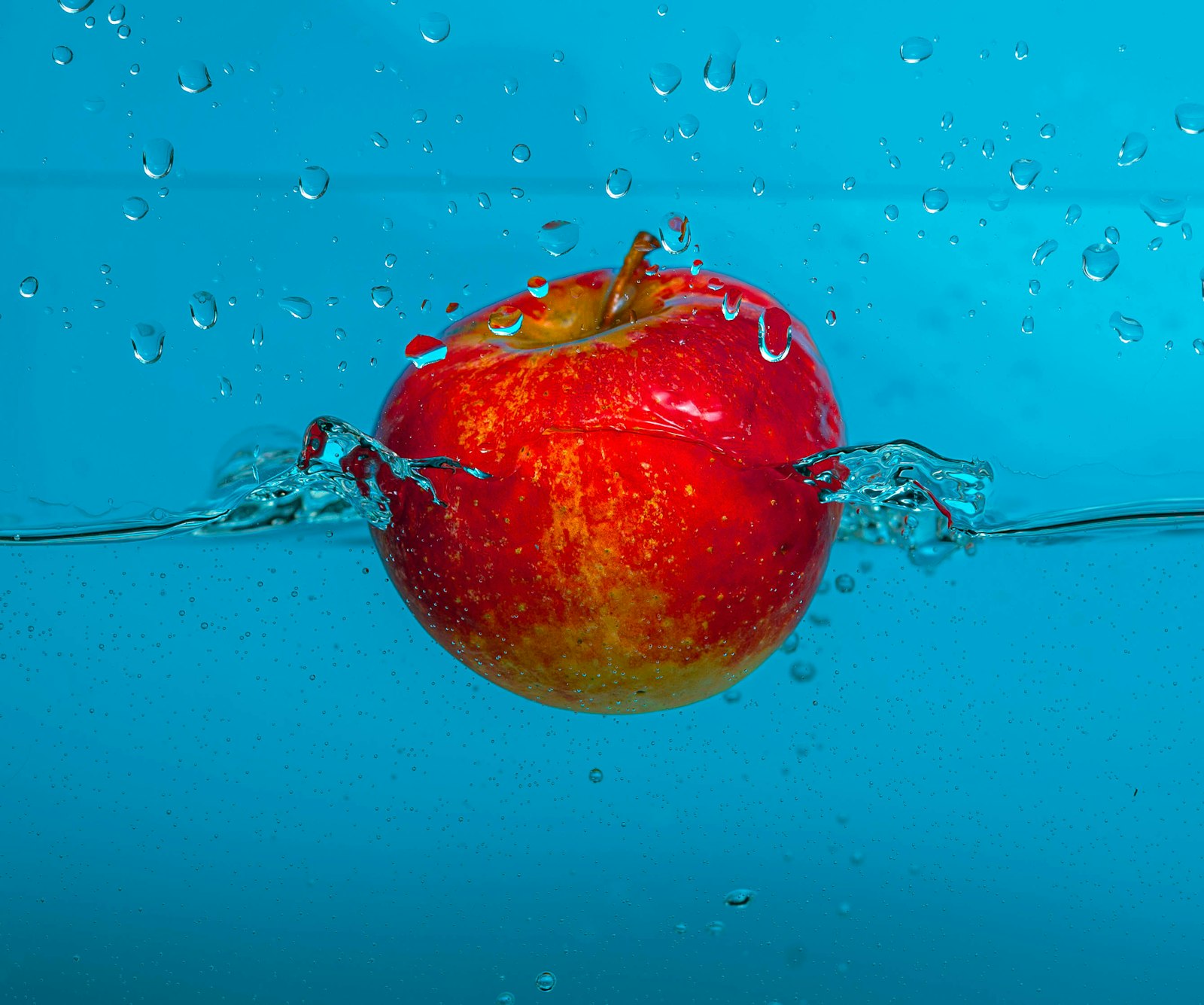
Game 5: The fortune-teller’s bowl
Practises: the future, then the present, then the past. A whole trip through time in one minute.
- Fill a bowl with water.
- Ask: will the apple float or sink? Everyone guesses. In your own language is fine.
- The fortune-teller points at one person and says: Comerá una manzana. They will eat an apple. That person gets the first slice later.
- Drop the apple in. Watch.
- Cut it. The chosen one eats and says Como una manzana. Afterwards: He comido una manzana.
Odd but true: two apple facts for the table
The apple floats. About a quarter of an apple’s volume is air, according to the growers’ organisation Love English Apples. That is why it bobs on top of the water instead of sinking. Most children guess wrong. That is part of the fun.
The Spanish apple has a Roman name. According to the dictionary of the Real Academia Española, manzana comes from the Latin Mattiana [mala], ‘the apples of Matius’. Gaius Matius was a Roman who wrote about farming in the first century BC. So every time you say manzana, you are naming a Roman gardening author. He probably never imagined that.
For teachers: in class
- Use game 1 or 3 as a five-minute warm-up.
- Groups of three work best: one plays, one checks, one swaps in.
- One apple per group is enough. A drawn apple works too.
- Keep the same sentence all week. Only change the game.
More ideas for class and home are on the page for teachers and parents.
What the games don’t do
Honestly: five games are not a course. They practise one sentence and a handful of endings. Vocabulary, irregular verbs and conversation come later. The games are a warm-up and a way to repeat things without anyone noticing they are repeating.
And repetition is the point. Spreading practice over several days works better than one long session. A large review of hundreds of experiments found exactly that. So: short, often, with breaks in between.
What you can try today
- Put an apple on the table.
- Pick one game. Just one.
- Play for five minutes.
- Stop while it is still fun.
- Play the same game again in one, three and seven days.
Want the sentence, the picture and the song together? ¡A comer! starts with Lesson 01, the Right-Now Camera. Ten minutes, one sentence.
Your step for today: put an apple where everyone can see it. That is the invitation.
Sources and image credits
- Cepeda, N. J., Pashler, H., Vul, E., Wixted, J. T. & Rohrer, D. (2006): Distributed practice in verbal recall tasks: A review and quantitative synthesis. Psychological Bulletin, 132(3), 354–380. doi.org/10.1037/0033-2909.132.3.354
- Real Academia Española: Diccionario de la lengua española, entry ‘manzana’. dle.rae.es/manzana
- FreshPlaza: Why do apples float? (source: Love English Apples). freshplaza.com
- Cover image: John Cameron / Unsplash. Apple in water: Natalia Makarenko / Unsplash.